
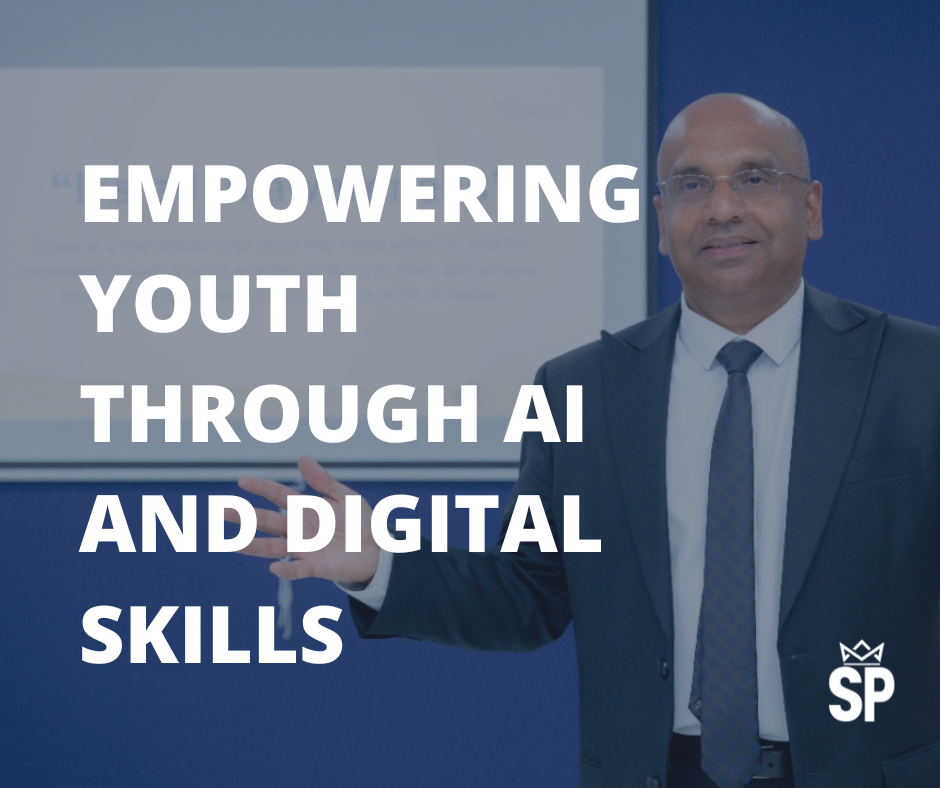
Empowering Youth through AI and Digital Skills
7 Proven Ways to Build a Fairer Future
London, UK

Why Empowering Youth through AI and Digital Skills Matters More Than Ever
1. Empowering Youth through AI and Digital Skills Requires Mindset Shifts, Not Just Tools
AI can process data, but it is human creativity, ethical reasoning, and resilience that shape the future. To truly empower youth, we must develop growth mindsets, moral frameworks, and critical thinking—transforming them from consumers to creators of technology.
2. Use AI to Democratise Access — Not Deepen Inequality
Empowering youth through AI and digital skills must include inclusive design: offline-compatible platforms, multilingual delivery, and mobile-first solutions. AI tutors and autonomous learning models can reach students in underserved communities—if access and equity are prioritised.
3. Reimagine the Role of Educators as AI-Enhanced Learning Architects
Educators must evolve into learning architects, using AI to personalise education and free up time for mentorship. This hybrid human-AI model ensures deeper engagement and prepares learners for the real world.
4. Align Technical Skills with Ethical AI Literacy
Youth must understand not only how AI works but its ethical implications. Topics like algorithmic bias, digital footprints, and responsible tech use are essential components of empowering youth through AI and digital skills.
5. Strengthen Technical and Vocational Education and Training (TVET)
TVET is central to preparing youth for AI-driven industries. Integrating skills such as cybersecurity, AI maintenance, and green tech ensures learners are ready for sustainable, future-facing roles in the global economy.
6. Create Public-Private Partnerships to Scale Youth Innovation
Empowering youth through AI and digital skills requires collaboration across sectors. Partnerships can fund training, support entrepreneurship, and bridge the education-employment gap through innovation labs and mentorship programmes.
7. Prioritise Girls and Underrepresented Youth in Digital Skills Initiatives
Equity must be foundational. Focus on girls, refugees, rural youth, and other marginalised groups by offering tailored programmes, mentorship, and protection from digital threats such as cyberbullying and bias.
A Decade of Progress — and the Work Ahead
As we mark 10 years of World Youth Skills Day, we must act decisively. Empowering youth through AI and digital skills is a global responsibility and a moral imperative. Let’s design inclusive, ethical, and impactful systems to unlock the full potential of the next generation.
FAQs on Empowering Youth through AI and Digital Skills
- Q1: What is the importance of empowering youth through AI and digital skills?
- It equips youth to succeed in the future of work, solve global problems, and participate fully in society.
- Q2: How can we ensure equitable access to AI education?
- Invest in digital infrastructure, develop offline resources, and target underrepresented communities.
- Q3: What role does mindset play in digital skills development?
- Mindset fuels resilience, creativity, and lifelong learning—core competencies in an AI-driven world.
- Q4: Are teacherless classrooms realistic?
- Yes, as part of a hybrid model where AI enhances learning while educators remain essential guides.
- Q5: How can we involve youth in creating digital solutions?
- Through innovation challenges, hackathons, and youth-led incubators focused on local and global problems.
- Q6: What’s the long-term impact of investing in youth digital skills?
- It unlocks economic growth, boosts democratic participation, and prepares future-ready citizens.