
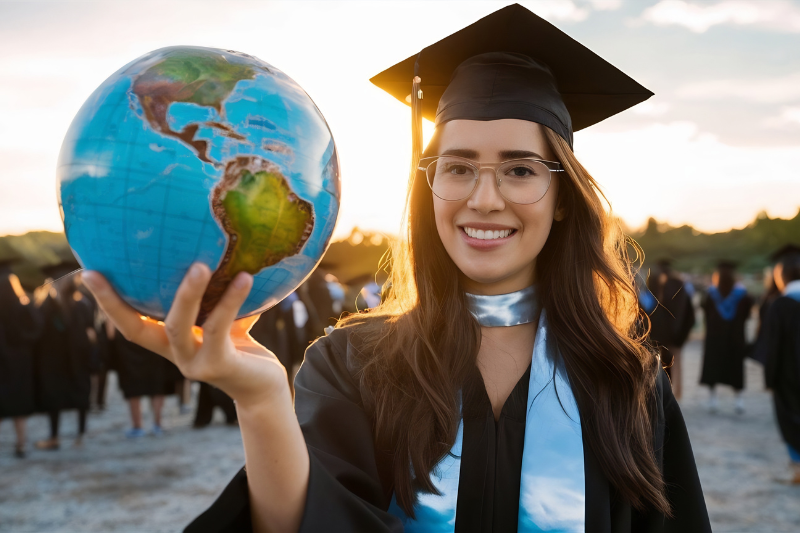
In today’s rapidly evolving world, education is no longer limited to classrooms within your city or country. The concept of learning has expanded beyond borders, creating a new era of opportunities for students worldwide. In 2026, Global Education Opportunities are not just an advantage they are a powerful pathway to building successful, future-ready careers.
Students today are no longer asking, “Where should I study?”
They are asking, “Where can I grow the most?”
This shift in mindset reflects a deeper understanding that global exposure, international qualifications, and practical learning experiences can transform not just careers, but entire lives.
The Rise of Global Education in 2026

The world has become more interconnected than ever before. Companies operate across continents, team’s work remotely across time zones, and industries demand professionals who can adapt to diverse environments. This is where Study Abroad Opportunities and international education systems play a crucial role.
In 2026, students are choosing global education because it offers more than just a degree. It provides exposure to different cultures, access to advanced learning systems, and the ability to build a global network.
For example, a student studying business in an international environment learns how markets operate differently in Asia, Europe, and the Middle East. This understanding gives them a competitive edge when entering the global workforce.
Similarly, students pursuing technology courses gain access to cutting-edge tools, real-world projects, and industry collaborations that are often not available in traditional education systems.
Building Career-Ready Skills Through Global Exposure
One of the biggest advantages of global education is the opportunity to develop Career-Focused Skills that align with industry demands.
Unlike traditional systems that focus heavily on theory, international programmes emphasize practical learning. Students work on real projects, participate in internships, and gain hands-on experience that prepares them for real-world challenges.
For instance, a student studying Artificial Intelligence in a globally aligned programme may work on projects involving automation, data analysis, or smart systems. This practical exposure ensures that they are job-ready even before graduation.
Similarly, a student in Hospitality Management may gain experience through internships in hotels, learning customer service, operations, and management skills directly from industry professionals.
This approach bridges the gap between education and employment, making students more confident and capable.
Global Qualifications That Open International Doors
In 2026, employers are not just looking for degrees they are looking for globally recognized qualifications. This is why International Qualifications such as UK-accredited diplomas and pathways are gaining immense popularity.
These qualifications are designed to meet global standards, ensuring that students can pursue careers or further studies anywhere in the world.
For example, a student completing an internationally recognized diploma in business can choose to work in Dubai, continue studies in the UK, or explore opportunities in Europe or Asia. This flexibility is one of the biggest advantages of global education.
It gives students the freedom to shape their future based on their goals, rather than being limited by geographical boundaries.
Exposure to Diverse Cultures and Perspectives
Education is not just about academics it is also about personal growth. One of the most valuable aspects of global education is the exposure to different cultures, perspectives, and ways of thinking.
Students who study in an international environment learn how to communicate with people from diverse backgrounds, understand different viewpoints, and adapt to new situations.
For example, a classroom with students from multiple countries creates a dynamic learning environment where ideas are shared, debated, and explored from different angles. This enhances creativity, critical thinking, and problem-solving abilities.
In a global workplace, these skills are highly valuable because companies operate in multicultural environments.
Higher Employability and Global Career Opportunities
The ultimate goal of education is to build a successful career. Global education significantly improves Employability Skills by preparing students for international job markets.
Employers today prefer candidates who have global exposure, practical experience, and the ability to adapt to different environments.
For example, a student who has completed an internationally aligned IT programme with internship experience is more likely to secure a job compared to someone with only theoretical knowledge.
Similarly, students with global education backgrounds often have better communication skills, confidence, and a broader understanding of industries, making them more attractive to employers.
This is why Global Career Opportunities are closely linked to international education.
Learning Flexibility and Modern Education Systems
Another key benefit of global education in 2026 is flexibility. Students can now choose from a variety of learning formats, including on-campus, hybrid, and online programmes.
This flexibility allows students to learn at their own pace while gaining access to high-quality education.
For example, a student can begin their studies in one country and complete their degree in another through pathway programmes. This not only reduces costs but also provides international exposure.
Additionally, modern education systems focus on skills rather than just exams. Students are assessed through assignments, projects, and practical work, making learning more engaging and effective.
Real-World Example: A Student’s Journey
Consider a student who completes their schooling and chooses a globally aligned diploma programme in business.
In the first year, they learn the fundamentals of business through practical assignments and case studies. In the second year, they gain industry exposure through internships and real-world projects.
After completing the programme, they have the option to either start working or continue their degree in another country.
This journey not only saves time and cost but also ensures that the student gains practical experience, global exposure, and career-ready skills.
Why 2026 Is the Best Time to Choose Global Education
The opportunities available today were unimaginable a decade ago. Technology has made it easier for students to access global education, while institutions have adapted to provide more flexible and career-focused programmes.
In 2026, choosing global education is not just about studying abroad it is about preparing for a future where borders no longer define opportunities.
Students who take advantage of these opportunities today will be better prepared for the challenges and opportunities of tomorrow.
Conclusion: Transform Your Future with Global Education
The world is changing, and education must evolve with it. Global education offers students the chance to gain international exposure, develop career-ready skills, and build a future without limits.
Whether it is through Study Abroad Opportunities, internationally recognized qualifications, or practical learning experiences, the benefits are clear.
The question is not whether global education is worth it.
The question is are you ready to take that step?
Click here to know more about global education programmes and start your journey towards a successful international career.
FAQs: Global Education Opportunities in 2026
Global education opportunities refer to studying internationally or pursuing programmes that provide global exposure, international qualifications, and career-focused learning.
It helps students gain international exposure, develop in-demand skills, and access global career opportunities.
It provides practical experience, enhances communication skills, and prepares students for global work environments.
Yes, many institutions offer hybrid and online programmes that provide global exposure without requiring relocation.
Courses in business, IT, artificial intelligence, cybersecurity, hospitality, and travel and tourism are highly in global markets.